
Skip to content
Climate B2C

Plan a project

See what a biochar project could look like for your supply chain.

Model the full project: biomass available, reactor production, capex/opex, carbon math, and agronomic outcomes. Upload a soil test PDF to skip the manual entry. Equipment paths are below.

Annual biomass

115.0 t

80.0 t coffee + 35.0 t shade

Potential biochar

23.0 t

At the modeled conversion %

Reactors supported

1.1

Modeling 1 reactor

Feedstock use

93.9%

7.0 t/yr spare

Tap a section to expand. The four open by default are the inputs that move the model the most; the rest hold reasonable defaults.

ha
trees/ha
trees/ha
kg/tree/yr
kg/tree/yr
units
years
%
%
%
cmolc/kg
m²/g

Upload a soil test as PDF (Spanish lab format with pH, CICe, P, Sat. Acidez), CSV, or JSON. Multi-lot PDFs are averaged.

%
%
cmolc/kg
mg/kg
%
kg/m³
cm

What you’d be installing

Three equipment paths. Pick the one that matches your scale.

Equipment is described by category and scale, not by brand. There are good options at every level. Once we know your country, your feedstock, and how much residue you have, we propose the specific units that fit.

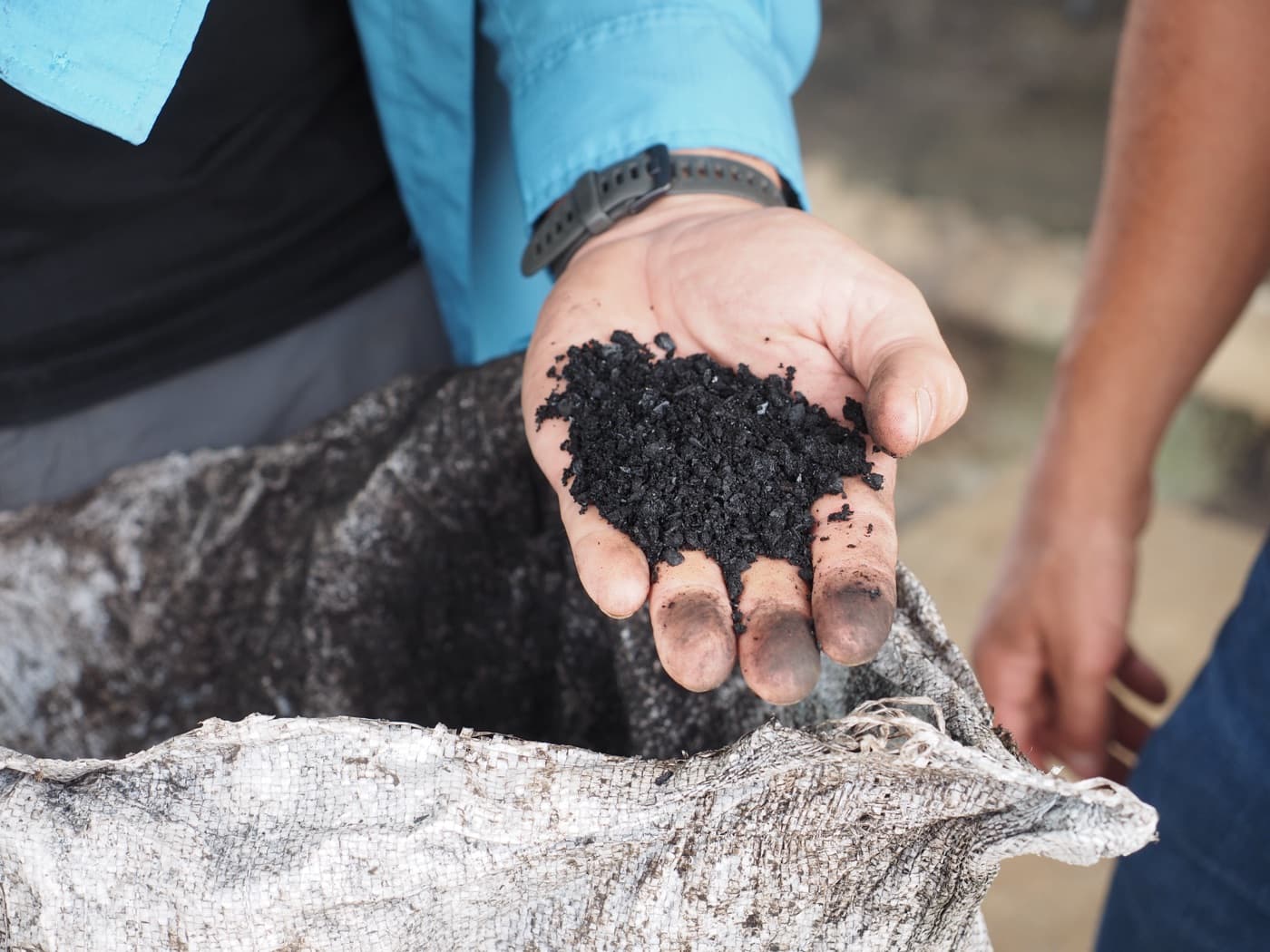
A handful of finished biochar pulled from a bag at a smallholder site

On-farm, single farmer

Low capital

Earthen kiln

A small-scale, low-cost on-farm kiln is the simplest way to start. A flame-front design oxidizes gases released in the combustion process, controlling emissions. Suitable for a single farm running a few batches per season.
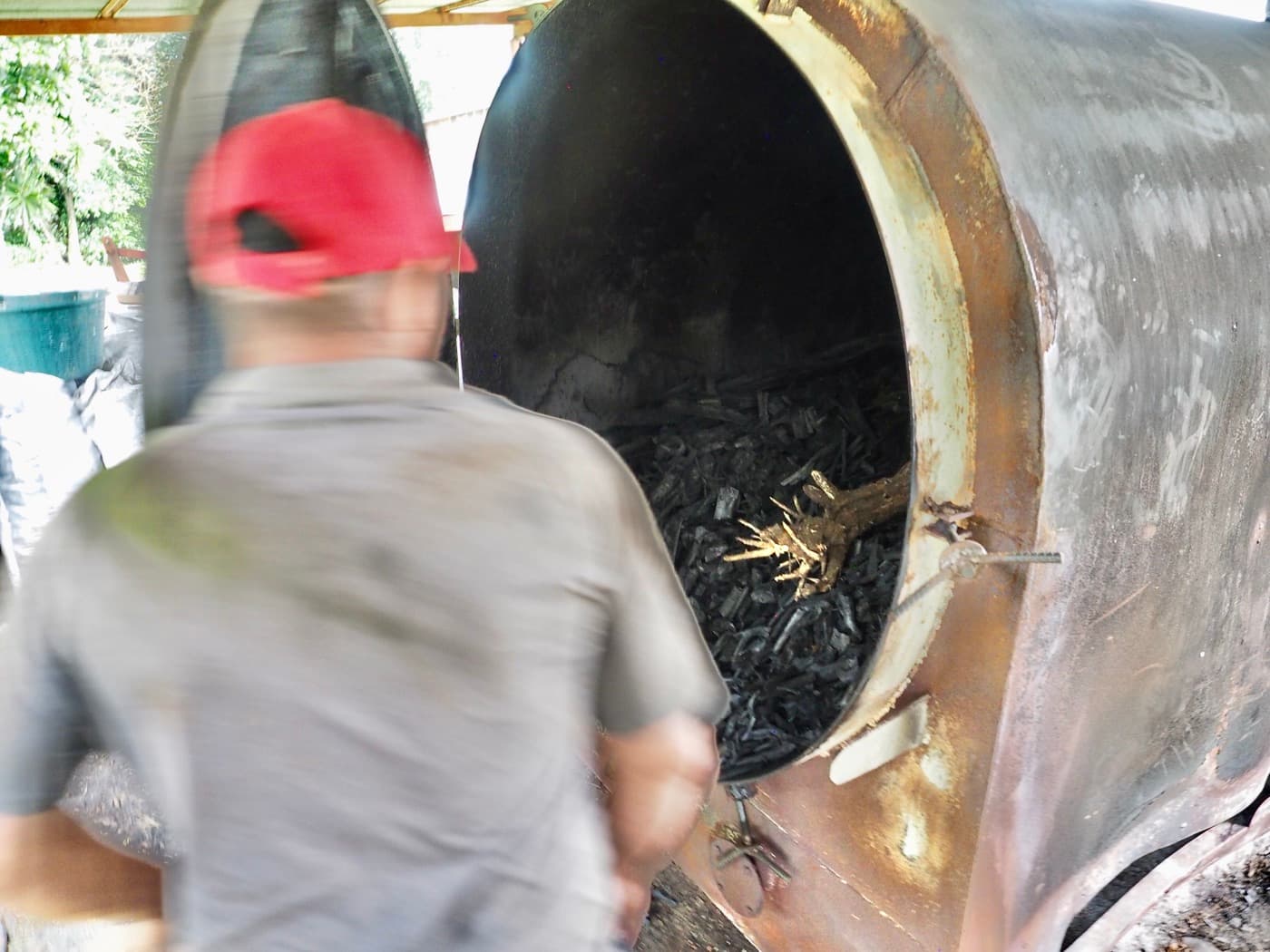
A batch pyrolysis reactor being loaded with feedstock at origin

Single farm or small co-op

Mid-range capital

Mid-size mobile reactor

A batch reactor with built-in emissions controls is towable, so a single unit can either serve one farm year-round or rotate among member farms in a small co-operative. A standard mid-tier choice.

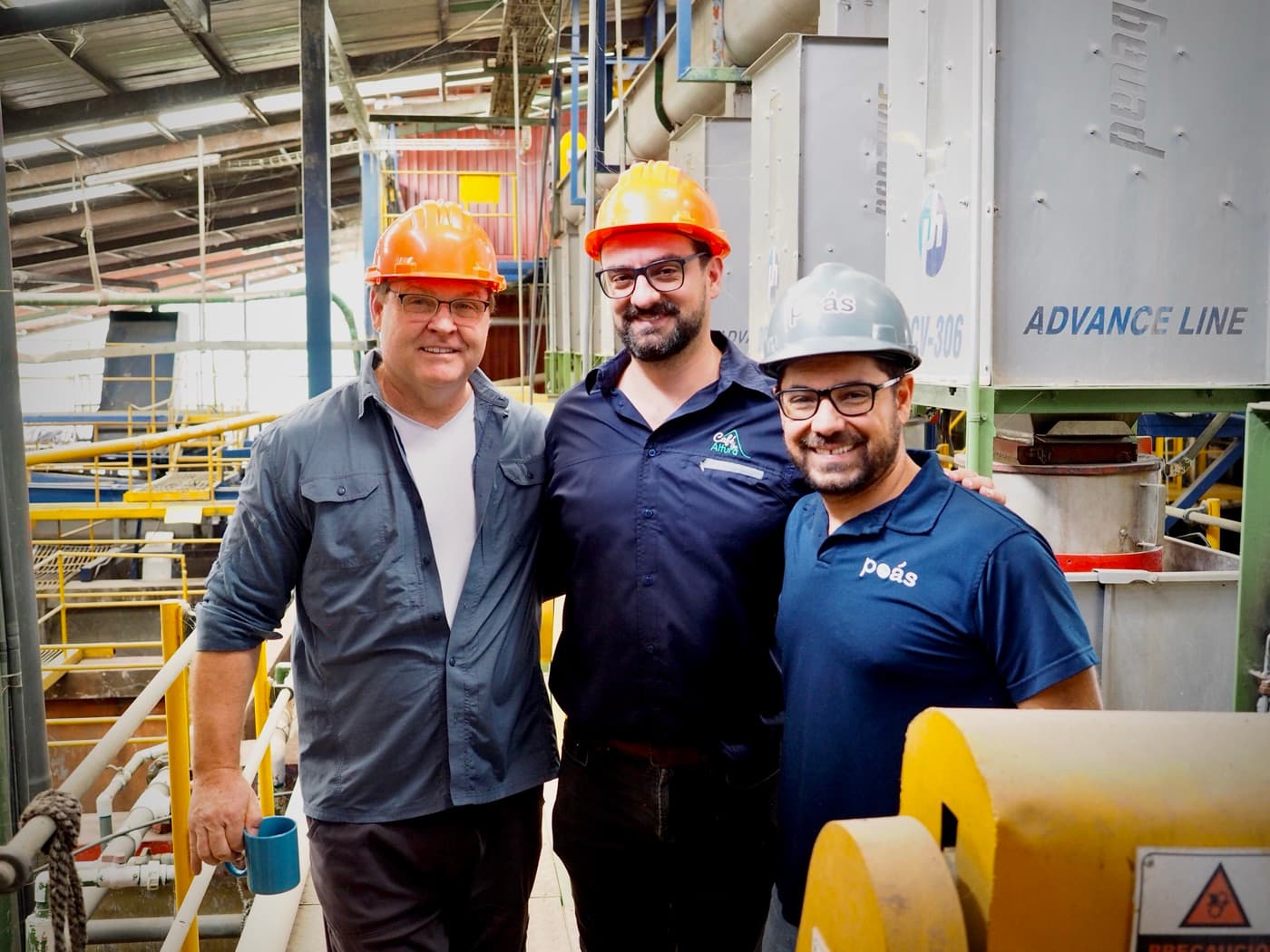
Project leads at a coffee mill processing facility

Wet mill or processing center

Higher capital

Continuous reactor at the mill

A continuously fed system designed for processing centers with year-round residue offers higher throughput and more automation than the batch options. The right fit when one location aggregates enough biomass to keep it running.

Capital and operating costs vary widely by country, by labor rate, and by import duties on equipment. We quote the real numbers once we know the project context.

Newsletter

Field notes from coffee origin.

Updates on active projects, technical findings, and honest accounts of what's working and what needs iteration.

One email a month. Unsubscribe any time.